Sheela-Na-Gig Small Statue
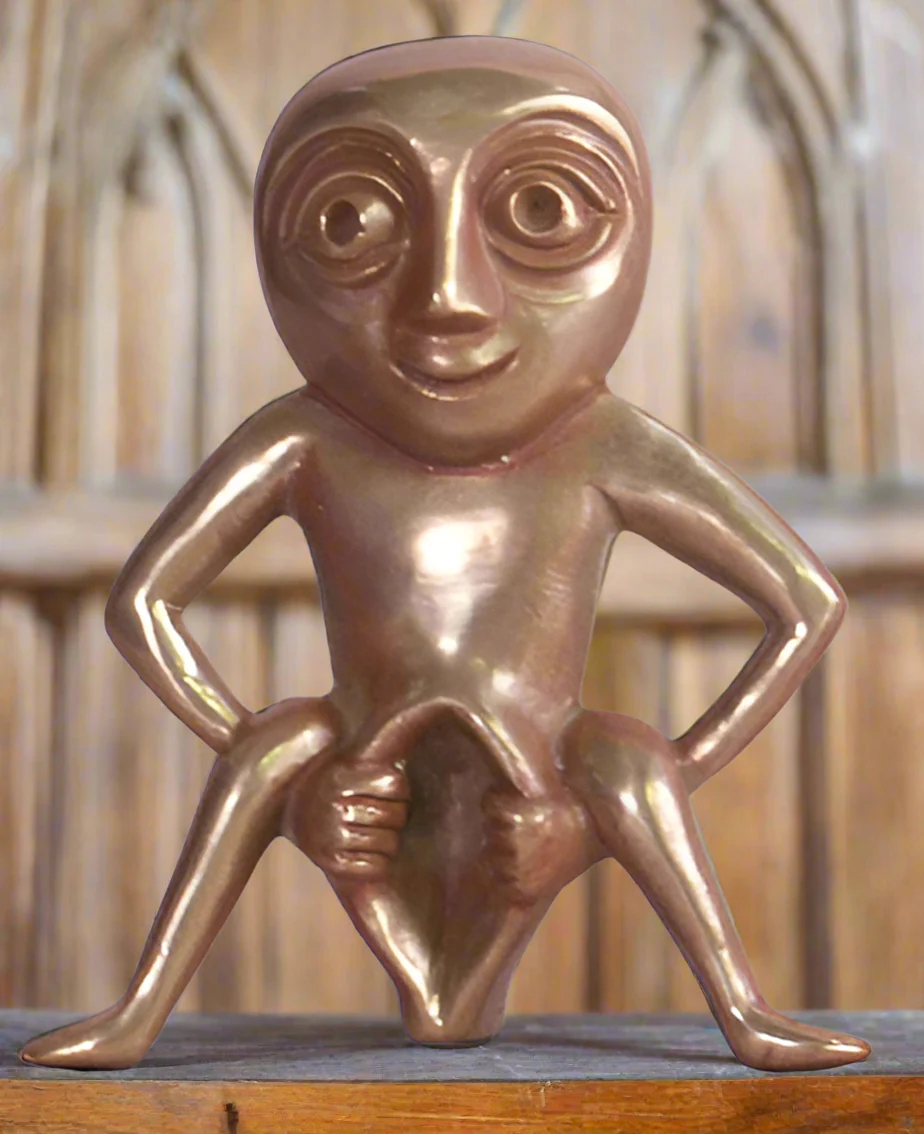
Traditional Celtic folk image of the Goddess.
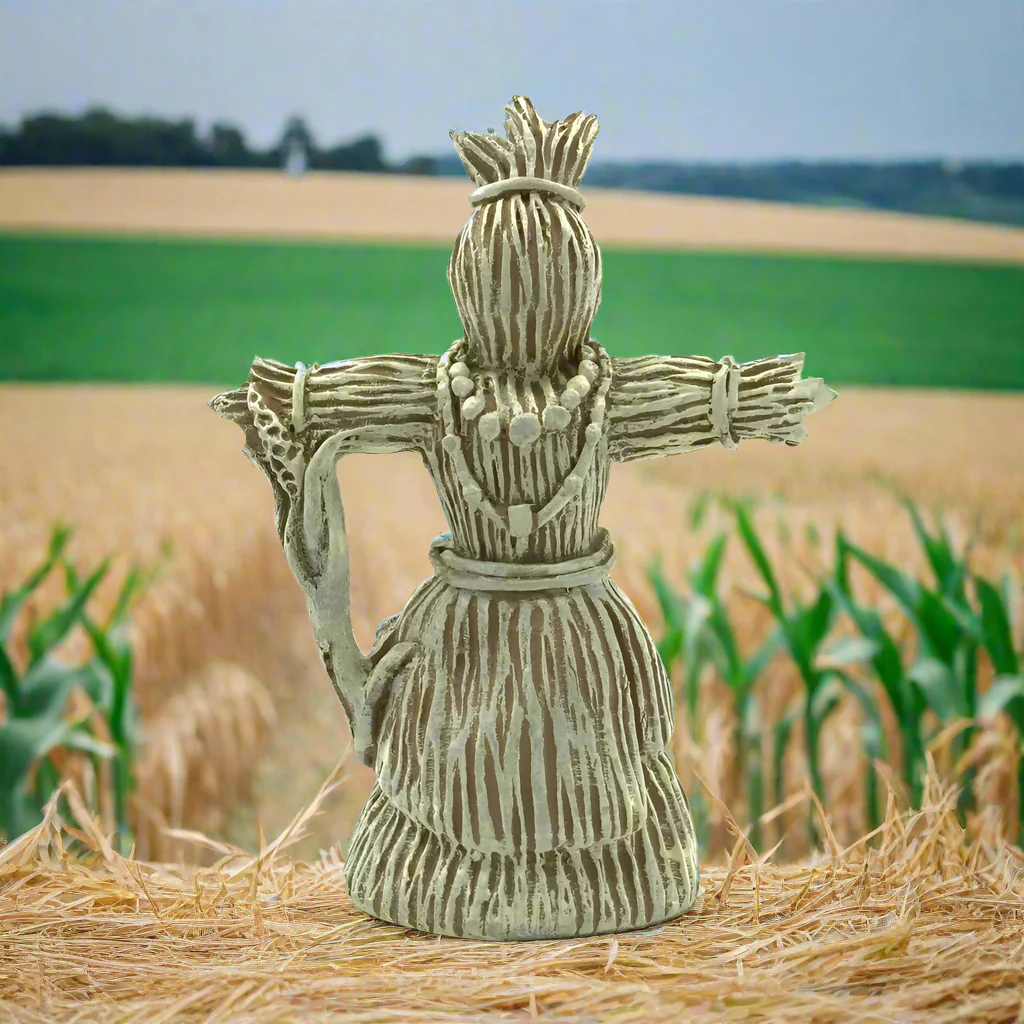
Her form is carved on ancient churches throughout Ireland, believed to ward off evil.This Celtic archetype of the Great Mother appeared in folk and church art by at least 1080 AD, but undoubtedly is of much earlier origin. She may be identical with the war goddess Morrigan, consort to the Dagda. One of her images is found near the ancient goddess shrine of Avebury, where she symbolized fertility; displaying her sexual parts was believed to ward off evil. Carvings of Sheela-na-Gigs may have accompanied the seasonal harvest custom of weaving corn dollies which dates from North European antiquity.
[Kilpeck Church, Herfordshire, 1140 CE]
4" cold cast bronze statue. #BZ-SHE
Traditional Celtic folk image of the Goddess.
Her form is carved on ancient churches throughout Ireland, believed to ward off evil.This Celtic archetype of the Great Mother appeared in folk and church art by at least 1080 AD, but undoubtedly is of much earlier origin. She may be identical with the war goddess Morrigan, consort to the Dagda. One of her images is found near the ancient goddess shrine of Avebury, where she symbolized fertility; displaying her sexual parts was believed to ward off evil. Carvings of Sheela-na-Gigs may have accompanied the seasonal harvest custom of weaving corn dollies which dates from North European antiquity.
[Kilpeck Church, Herfordshire, 1140 CE]
4" cold cast bronze statue. #BZ-SHE
$14.70
Original: $49.00
-70%Sheela-Na-Gig Small Statue—
$49.00
$14.70Description
Traditional Celtic folk image of the Goddess.
Her form is carved on ancient churches throughout Ireland, believed to ward off evil.This Celtic archetype of the Great Mother appeared in folk and church art by at least 1080 AD, but undoubtedly is of much earlier origin. She may be identical with the war goddess Morrigan, consort to the Dagda. One of her images is found near the ancient goddess shrine of Avebury, where she symbolized fertility; displaying her sexual parts was believed to ward off evil. Carvings of Sheela-na-Gigs may have accompanied the seasonal harvest custom of weaving corn dollies which dates from North European antiquity.
[Kilpeck Church, Herfordshire, 1140 CE]
4" cold cast bronze statue. #BZ-SHE